Invasive Species on Construction Sites: Your Legal Obligations
It's More Common Than You Think
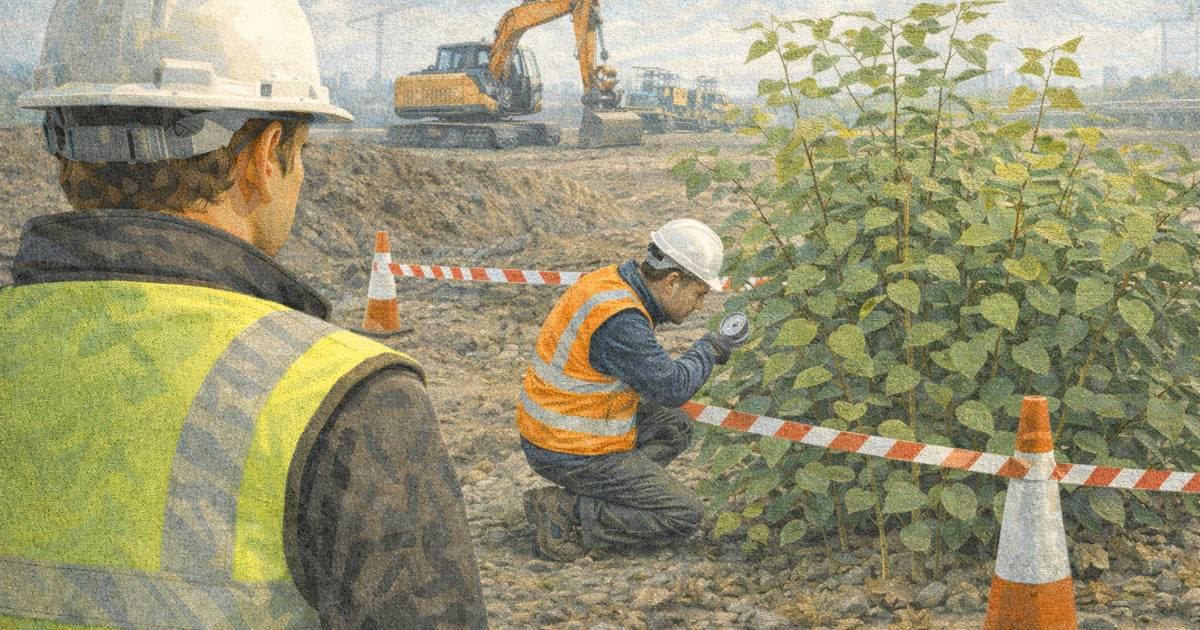
If you're working on brownfield sites, near watercourses, or on infrastructure projects that run through semi-rural land, you're going to encounter invasive species at some point. Japanese knotweed is the headline act — it can grow through tarmac, undermine foundations, and reduce property values — but it's far from the only one. Giant hogweed causes severe burns on contact with skin. Himalayan balsam outcompetes native plants and destabilises riverbanks. New Zealand pigmyweed chokes waterways. And if you're on a water industry site, the chances of encountering at least one of these is very high.
The Wildlife and Countryside Act 1981 makes it an offence to plant or otherwise cause to grow in the wild any plant listed in Schedule 9. "Otherwise cause to grow" is the critical phrase — if you spread Japanese knotweed by moving contaminated soil from your site to a disposal area or another part of the site, you've committed an offence. The penalties include unlimited fines and up to two years' imprisonment.
Japanese Knotweed: The Big One
Japanese knotweed (Fallopia japonica) is probably the most costly invasive plant species in the UK. It can grow up to 3 metres tall, its rhizomes (underground roots) can extend 7 metres laterally and 3 metres deep, and a fragment of rhizome as small as 0.7 grams can regenerate into a new plant. That means any soil that contains knotweed rhizome is effectively contaminated, and moving it without proper controls spreads the infestation.
Under the Environmental Protection Act 1990, soil contaminated with knotweed is classified as controlled waste. It must be disposed of at a licensed facility, and the waste transfer note must describe the knotweed contamination. Fly-tipping knotweed-contaminated soil is a serious criminal offence.
If you find knotweed on your site, stop excavation in that area immediately. Don't strim it, don't mow it, don't try to dig it out yourself. Contact a specialist removal contractor who holds PCA (Property Care Association) accreditation and get a management plan in place. Treatment options include herbicide application (usually glyphosate, applied over two to three growing seasons), excavation and removal of contaminated soil (expensive but immediate), or root barrier installation to contain the spread.
Giant Hogweed: A Direct Health Risk
Giant hogweed (Heracleum mantegazzianum) is a genuine danger to your workforce. The sap contains furanocoumarins, which cause severe phytophotodermatitis — essentially, the sap makes skin extremely sensitive to sunlight, resulting in blistering, burns, and scarring that can take months to heal. Contact with eyes can cause temporary or permanent blindness. This isn't a minor irritation — it's a medical emergency.
If giant hogweed is identified on site, establish an exclusion zone, brief all workers (include it in the site induction and do a specific toolbox talk on it), and arrange professional removal. Workers who need to enter the area must wear full protective clothing including face shields. Treat it like a COSHH-level hazard, because that's essentially what it is.
Your Duties as a Contractor
Under CDM 2015, the pre-construction information should identify known invasive species on or near the site. If you're the principal contractor, check whether this information was included and whether it's been addressed in the construction phase plan. If it wasn't included, and you discover invasive species during the work, you need to stop, assess, and report it to the client and the principal designer.
An ecological survey should have been done before construction started. If it wasn't, or if conditions have changed since the survey, you may need a specialist to carry out an updated assessment. Ebrora's Ecological Exclusion Zone Checker helps you determine buffer distances for protected habitats and species, and the Invasive Species Assessment Builder generates a formal assessment document for your project records.
Managing Contaminated Soil
Any soil excavated from an area known to contain Japanese knotweed must be treated as controlled waste. Options for dealing with it include: on-site burial in a dedicated cell (minimum 5 metres depth, lined and capped), off-site disposal at a licensed landfill (expensive, typically £100–£200 per tonne including transport), or on-site treatment using a root barrier membrane system.
Whatever route you choose, keep meticulous records. Waste transfer notes, disposal certificates, site plans showing the extent of contamination, photographs, and a management plan. If the Environment Agency or the local authority asks — and they do — you need to be able to demonstrate a complete chain of custody for every cubic metre of contaminated material.
Don't assume invasive species are someone else's problem. If you're moving soil, managing vegetation, or working near watercourses, they're your problem. Identify them early, manage them properly, and document everything. The legal and financial consequences of getting it wrong far outweigh the cost of doing it right.
Build Better Sites with Our Templates
The templates and systems discussed in this article can save your team hours every week. Explore our full product range to find tools that match your workflow.
Explore Products