Lone Working on Remote Construction Sites
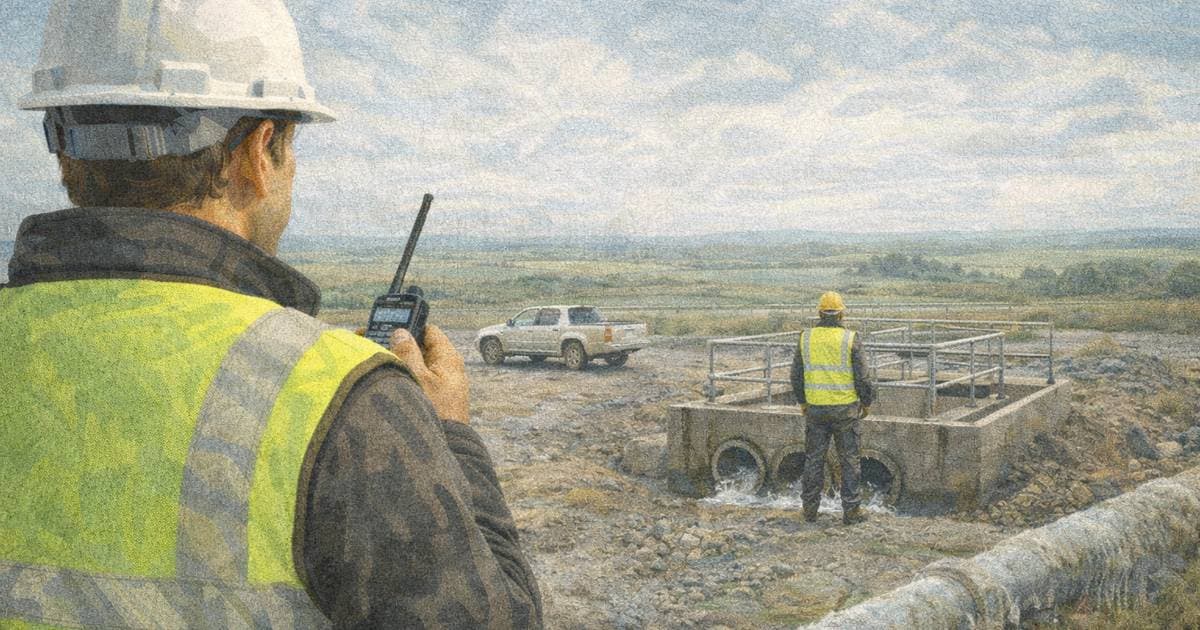
Lone Working Is Everywhere
When people think of lone working in construction, they picture someone on a remote hill doing a topographical survey. But lone working happens far more often than that. The supervisor who does a site walk at 06:30 before anyone else arrives. The pump attendant checking equipment at a remote outfall at midnight. The engineer driving between three sites in a day, spending an hour alone at each one. The security guard doing rounds on an unoccupied site at weekends. All of these are lone working situations, and all of them need to be assessed and managed.
The Management of Health and Safety at Work Regulations 1999 require a specific risk assessment for lone working situations. The Health and Safety at Work Act 1974 places a general duty on employers to ensure the health and safety of their employees, including those working alone. There's no regulation that bans lone working outright — but there are activities where it should never happen, including work in confined spaces, live electrical work, and any task involving lifting operations.
What the Risk Assessment Must Cover
A lone working risk assessment addresses the additional risks that arise specifically because the person is alone. The most obvious: if something goes wrong, there's nobody to help. A slip into a chamber, a medical event, an encounter with a member of the public on an isolated site — all of these are survivable with assistance and potentially fatal without it.
The assessment should consider: the location and its remoteness, mobile phone signal availability, the nature of the task and its inherent risks, the physical fitness of the individual, the presence of any environmental hazards (water, terrain, weather), the likelihood of encountering other people (including the public), and the communication and monitoring arrangements.
Ebrora's Lone Worker Risk Calculator scores these factors and produces a risk rating with recommended control measures. It's designed for construction scenarios specifically, so it covers things like distance from emergency services, ground conditions, and site security — factors that generic lone working tools often miss.
Communication and Check-In Systems
The non-negotiable control for lone working is a communication system. The person working alone must be able to contact someone, and someone must know where they are and when to expect to hear from them.
The simplest version: a buddy system. Before going to a remote location, the lone worker tells a named person where they're going, what they're doing, and when they'll be back. The buddy calls them at the agreed time. If there's no answer, the buddy escalates immediately — not after trying again in half an hour.
For higher-risk situations, consider a personal safety device with GPS tracking and an SOS button. Several providers offer construction-specific devices that work in areas with poor mobile signal by using satellite communication. These are particularly important for overnight work, water industry sites near open water, or remote locations more than 30 minutes from the nearest ambulance response point.
Whatever system you use, test it before relying on it. If the mobile signal drops to nothing at the bottom of the chamber where the work is happening, your communication plan needs a backup.
When Lone Working Isn't Acceptable
Some tasks must never be done alone, regardless of the risk assessment outcome. Confined space entry always requires a top person. Working over or near water needs a rescue capability that one person can't provide. High-risk electrical work, heavy lifting, and work at height in exposed locations all need at least one other person present.
The risk assessment should set clear boundaries: these tasks are acceptable for a lone worker with these controls, and these tasks are not acceptable under any circumstances. Make sure the lone worker knows the boundaries and has the authority to stop if conditions change. If they arrive at a remote site and find something unexpected — flooding, structural damage, signs of intruders — they need to know it's okay to leave and call it in rather than pressing on alone.
Health Considerations
Not everyone is suitable for lone working. People with certain medical conditions — epilepsy, heart conditions, diabetes that requires monitoring — may face additional risks when alone. This doesn't mean they can't lone work, but it does mean the risk assessment needs to address their specific situation and the controls might need to be more stringent.
Mental health is also a factor. Prolonged lone working, particularly night shifts in remote locations, can contribute to stress, anxiety, and isolation. Check in with your lone workers regularly — not just for safety, but for wellbeing. A five-minute phone call asking "how are you getting on?" costs nothing and can flag problems early.
Run through the risk calculator for each lone working scenario on your project, document the assessment, implement the controls, and review them when anything changes. Lone working is a manageable risk — but only if you actually manage it.
Build Better Sites with Our Templates
The templates and systems discussed in this article can save your team hours every week. Explore our full product range to find tools that match your workflow.
Explore Products