UV Exposure on Site: The Risk Nobody Talks About
Five Times the Risk
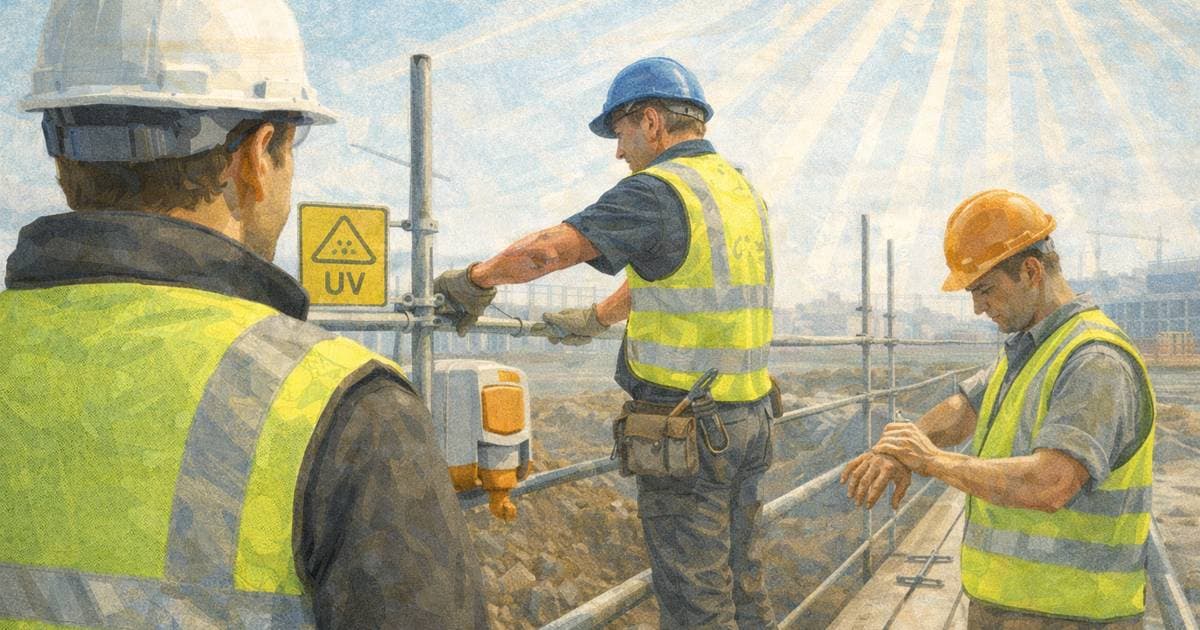
That statistic comes from the Institution of Occupational Safety and Health, and it should terrify anyone who manages outdoor workers. Outdoor construction workers in the UK receive two to three times the annual UV dose of indoor workers. Non-melanoma skin cancer is the most commonly reported occupational cancer to the IIDB scheme. And yet walk onto any construction site in July and half the workforce will have their sleeves rolled up, no sun cream on, and no shade within a hundred metres.
UV radiation is a Class 1 carcinogen — the same category as asbestos and tobacco smoke. The Health and Safety at Work Act 1974 requires employers to protect workers from health risks, including UV exposure. But unlike asbestos, where the regulations are detailed and the enforcement is aggressive, UV exposure falls into a grey area that most sites just don't address.
When Is UV Dangerous?
UV radiation is significant in the UK from roughly April to September, with peak intensity between 11:00 and 15:00. The UV Index — a scale from 1 to 11+ — provides a practical measure of risk. At UV Index 3 or above, protection is needed for prolonged outdoor work. In the UK, we regularly hit UV Index 6–8 in summer, which is classified as "high" to "very high."
Cloud cover reduces UV but doesn't eliminate it. Up to 80% of UV radiation passes through light cloud. Reflective surfaces — water, concrete, metal sheeting — can increase UV exposure by bouncing radiation upwards onto areas that aren't normally exposed, like the underside of the chin and the neck.
Ebrora's UV Index Exposure Checker gives you the UV forecast for any UK location and date, along with recommended protection levels and maximum unprotected exposure times based on skin type. Check it each morning and you'll know whether you need to implement controls before anyone sets foot on site.
The Controls That Work
Scheduling. Where possible, schedule outdoor work for the early morning or late afternoon during high UV months. The most intense UV hits between 11:00 and 15:00 — if heavy outdoor labour can happen either side of that window, do it.
Shade. Temporary shade structures at break areas are cheap and effective. Pop-up canopies, shade sails, even positioning the welfare unit to create shade. People take their breaks in the shade instinctively — give them somewhere to do it.
Clothing. Long sleeves, collars, hard hat brims, and neck flaps provide physical UV protection. Dark, tightly woven fabrics block more UV than light, loose-weave materials. Some hi-vis clothing now comes with built-in UV protection rated to UPF 50+. If your workforce is in short sleeves from April to September, you've got an uncontrolled exposure route.
Sun cream. SPF 30 minimum, broad-spectrum, applied before going outside and reapplied every two hours. Provide it in dispensers in the welfare unit and at sign-in points. Make it as available as hand sanitiser. Some sites I've worked on put it next to the signing-in book — you can't avoid seeing it.
Changing the Culture
The biggest obstacle is attitude. "A bit of sun never hurt anyone." "Real men don't wear sun cream." "It's only the UK, we barely get any sun." All of these are wrong, and they're killing people — slowly, over decades, through accumulated damage that manifests as skin cancer in their fifties and sixties. Melanoma incidence in male outdoor workers is rising, and the lag between exposure and diagnosis means the cases we're seeing now reflect working practices from twenty years ago.
Toolbox talks help. Showing the statistics, showing photos of non-melanoma skin cancer (with appropriate sensitivity), and making sun protection a normal part of the site induction rather than an afterthought. If you wear sun cream on the beach, why not on the scaffold? The UV is the same.
Check the UV index every morning with our free checker, and mention it at the daily briefing alongside the weather forecast. "Today's UV index is 6, which is high — wear long sleeves, apply sun cream at break, and use the shade canopy." That normalises it. Pair UV protection with heat stress controls in summer and you've got a comprehensive warm-weather welfare programme that protects your team and demonstrates due diligence.
Don't let this be the risk that nobody talks about on your site. Talk about it, control it, and keep checking. Our Sunrise & Sunset Times tool also helps with planning daylight hours for seasonal work scheduling.
Build Better Sites with Our Templates
The templates and systems discussed in this article can save your team hours every week. Explore our full product range to find tools that match your workflow.
Explore Products