Dewatering and Discharge on Construction Sites: Consents, Silt and Staying Legal
The Ditch Is Not a Drain
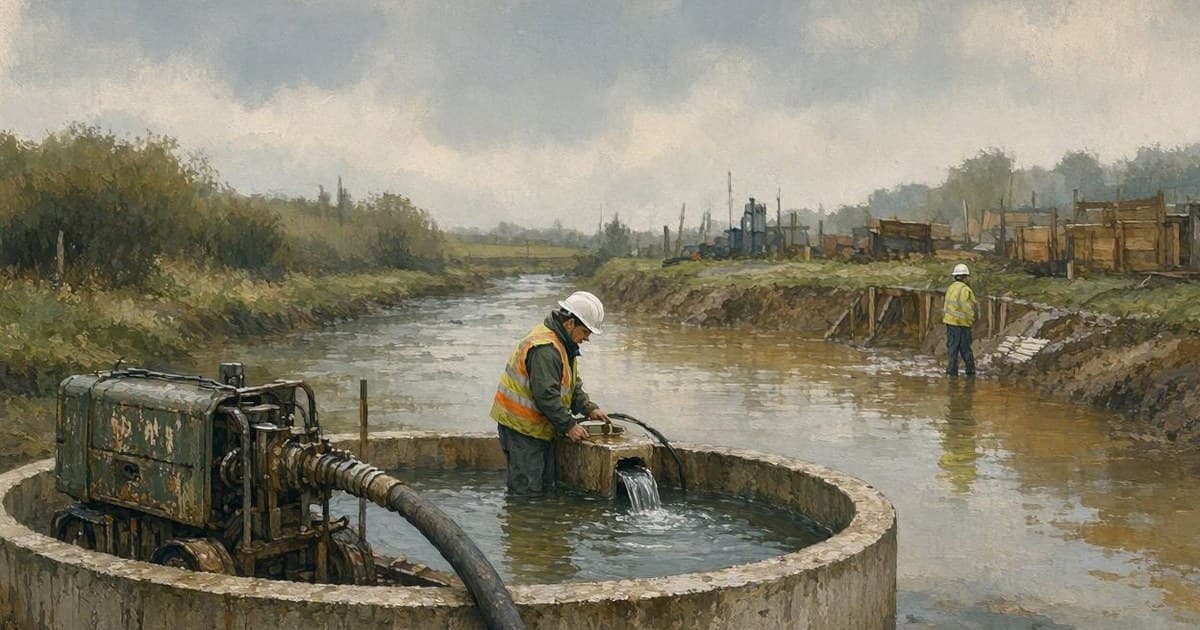
It is Monday morning, the excavation is full after a wet weekend, and the programme wants it dry by lunch. The pump is on the wagon and the ditch is right there. This is the moment sites commit environmental offences — because causing or knowingly permitting a polluting discharge to enter a watercourse or groundwater is an offence, silty water is a pollutant, and enforcement bodies treat construction runoff as exactly what it is: one of the most common causes of water pollution incidents in the country. Silt is not "just muddy water". It smothers gravel beds, kills invertebrates, wipes out fish spawning habitat, and it does it miles downstream of your site while the water leaving your pump still looks merely cloudy. Visible turbidity is orders of magnitude above the level at which damage happens.
Know Your Lawful Routes Before You Pump
To a watercourse or to ground: discharging site water to a river, stream, ditch or soakaway generally needs an environmental permit from the regulator — the Environment Agency in England, with equivalent regimes under SEPA in Scotland and NRW in Wales — unless the activity fits an exemption or a low-risk position. Permits come with conditions on quality, typically framed around suspended solids and visible pollution, and the application takes weeks, which is one more reason dewatering belongs in the pre-construction plan rather than the Monday-morning panic.
To a public sewer: needs a trade effluent consent from the water company. It is often the pragmatic route for hard-to-treat water, but it is not automatic, it is not free, and connecting without consent is its own offence.
Abstraction on the way in: prolonged groundwater dewatering can also engage abstraction licensing once volumes exceed the regulatory threshold (in England, generally above 20 cubic metres a day, subject to the current exemption rules for dewatering). If your excavation needs continuous wellpointing for months, get advice early — the licensing question and the discharge question arrive together.
Over land / to reuse: pumping to a grassed area for infiltration well away from any watercourse, or reusing water for dust suppression and wheel washing, can be the lowest-risk answer of all for modest volumes — provided it genuinely infiltrates and does not simply take the scenic route to the ditch.
Actually Dealing With Silt
Whatever the route, the engineering is the same: slow the water down and give the solids time and distance to drop out. Settlement tanks and lagoons sized for your actual pump rate — undersized settlement is decoration; the water needs genuine residence time, and baffles to stop it short-circuiting from inlet to outlet. Proprietary settlement units and lamella separators where space is tight. Flocculation for the fine clay fraction that will not settle on its own — effective, but dosing needs competence and the treated water still needs checking. Silt fencing and bunds to keep runoff from entering excavations in the first place, because the cheapest water to treat is the water you never had to pump. And pump management basics that cost nothing: float the suction or keep it off the base of the excavation instead of letting it hoover the slurry layer, pump early at lower rates rather than late at full bore, and stop when the discharge deteriorates.
Then monitor like you mean it: look at the discharge point and the receiving water — upstream and downstream — every time pumping runs, record what you saw, and give the person doing the checks the authority to shut the pump off. A discharge log with times, observations and actions is both your control loop and your evidence.
When It Goes Wrong
If the receiving water turns, stop pumping first and diagnose second. Contain what you can, notify the regulator's incident hotline promptly if a pollution incident is occurring — self-reporting early and acting fast counts heavily in your favour compared with the downstream neighbour reporting it for you — and preserve the record of what happened and what you did. The follow-up questions will be about your system: the consent, the settlement sizing, the monitoring log, the briefing. Sites with a real dewatering plan have answers; sites with a pump and a ditch have a prosecution file.
The discipline is not complicated: plan the discharge route before you need it, get the consents in motion early, size the settlement for the real flow, watch the water every day, and treat the ditch as what it is — the start of somebody's river.
Build Better Sites with Our Templates
The templates and systems discussed in this article can save your team hours every week. Explore our full product range to find tools that match your workflow.
Explore Products